


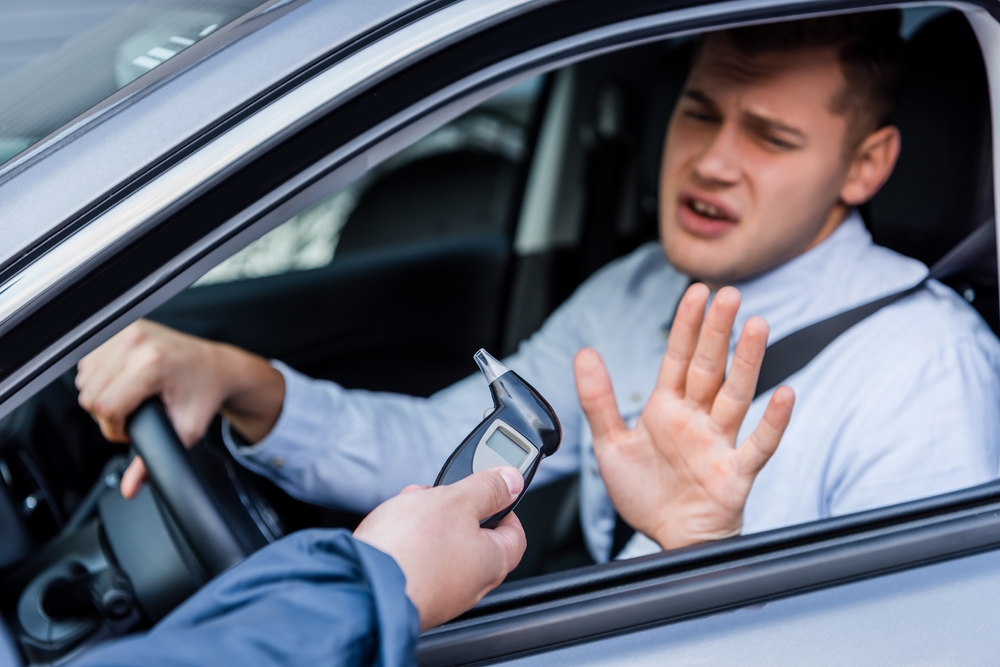
Refusing a breath test in Pennsylvania can feel like taking control of your current situation. Maybe you are worried that blowing into the machine will hand the police hard evidence. Maybe a friend once told you to never agree to a breathalyzer.
In reality, refusing a chemical test in Pennsylvania often makes things much worse. It can trigger a separate license suspension through PennDOT, bump DUI penalties into a higher tier, and give prosecutors one more tool to use against you in court.
As a Pittsburgh DUI lawyer, Attorney Samir Hadeed focuses on defending people in exactly these situations. Hadeed Law represents drivers across Allegheny County and Western Pennsylvania who are facing DUI charges, traffic offenses, and license problems.
In this guide, let's look at how Pennsylvania’s implied consent law works, what really happens if you refuse the breath test, how license suspensions and DUI charges collide, and what defenses a Pittsburgh DUI lawyer might explore to protect your rights.
Pennsylvania’s Implied Consent Law Explained
Pennsylvania uses what is called implied consent law. Under 75 Pa.C.S. § 1547, anyone who drives on Pennsylvania roads is considered to have agreed in advance to submit to a chemical test of breath, blood, or urine if a police officer lawfully arrests them for DUI and requests testing.
That doesn't mean officers can force you to blow into a machine or submit to a blood draw. What it does mean is, if you refuse the requested test after you've been lawfully arrested, the law allows the state to impose serious civil and criminal consequences.
Key points about implied consent:
- Applies after a lawful arrest for DUI, not during a casual roadside conversation.
- Covers chemical tests, not simple field sobriety tests like walking a line.
- Allows PennDOT to suspend your license even if you are never convicted of DUI.
Understanding that separation between a criminal case and a civil license suspension is crucial in any refusing breath test in Pennsylvania.
What Counts As "Refusing" The Breath Test In Pennsylvania?
Many people think refusal only means saying the word "no." In practice, PennDOT and the courts treat a lot of behaviors as refusal.
It may be found that you refused if you:
- Explicitly say that you will not take the breath or blood test.
- Agree at first, then refuse to actually blow or cooperate.
- Pretend to blow into the machine, but clearly fail to give a valid sample.
- Keep asking delaying questions after clear implied consent warnings are read.
- Stay silent or uncooperative when the officer needs a clear answer.
Courts typically look at whether you clearly and unequivocally refused after being informed of the consequences. If the officer believes you refused, they will report that refusal to PennDOT, which starts the license suspension process.
That is one reason it is so important to get a Pittsburgh DUI lawyer involved as soon as possible. You and your attorney will often need to reconstruct exactly what was said and done during that short, stressful window.
Civil License Suspensions For Refusal: The PennDOT Side
Refusing a chemical test triggers a separate civil penalty through the Pennsylvania Department of Transportation. PennDOT can suspend a driver’s license, even if:
- The DUI charge is later dropped
- You are found not guilty in criminal court
- The prosecutor never officially files a DUI charge
Under Section 1547 and related PennDOT rules:
- A first refusal typically results in a 12-month license suspension.
- A second or subsequent refusal, a prior DUI refusal on your record, generally results in an 18-month suspension period.
This is sometimes called an “administrative license suspension.” This suspension is independent of whatever happens in your DUI court case.
In many cases, drivers who refuse will face two separate suspensions:
- A PennDOT refusal suspension under implied consent
- A DUI-related suspension if they plead guilty, are convicted, or if they complete ARD
Those suspensions can stack, which means the total time without full driving privileges can be extended much longer than expected.
You have the right to challenge a refusal suspension by filing a civil license appeal in the Pennsylvania Court of Common Pleas. That said, strict filing deadlines apply. If you miss the appeal window, PennDOT’s suspension will typically remain in effect.
How Refusal Impacts A DUI Case
On top of any civil suspension, refusing the breath test affects how a DUI case itself is charged and sentenced.
Refusal and DUI Penalty Tiers
Pennsylvania’s DUI law has different penalty tiers based mostly on blood alcohol concentration (BAC) and prior record. That being said, refusing a breath test typically allows prosecutors to seek the highest or “third tier” penalties in a DUI case, because the law treats a refusal similar to a very high BAC result. That can mean:
- Higher mandatory minimum jail time
- Larger fines
- Longer court-ordered DUI suspensions
Current law limits how states may criminally punish drivers for refusing a warrantless blood draw. In response to these rulings, Pennsylvania has largely shifted the consequences of blood test refusals to the civil side, most notably through automatic license suspensions imposed by PennDOT, rather than separate criminal penalties for the refusal itself.
While refusal issues can still arise in certain cases, particularly those involving older arrests or evolving appellate decisions, the primary penalty today is administrative, not criminal.
The bottom line: If you refuse testing, you will likely face harsher DUI penalties than if you had taken the breath test and produced a lower BAC reading.
Refusal as Evidence At Trial
Section 1547(e) of the Vehicle Code allows the Commonwealth to introduce evidence that a defendant refused chemical testing in a DUI prosecution. The Pennsylvania Supreme Court has upheld this evidentiary rule against several constitutional challenges, although opinions sometimes differ on how it should apply.
That means the prosecutor can argue to the jury that you refused the test because you knew you were impaired. A Pittsburgh DUI lawyer may be able to counter that with other explanations, but refusal evidence is often damaging in front of a jury.
This is part of the “collision” between license suspensions and DUI charges in refusal cases. One split-second decision to refuse can:
- Trigger a year or more of license loss through PennDOT
- Move you into a higher DUI penalty tier
- Give the prosecutor a powerful argument at trial
Common Myths About Refusing A Breath Test In Pennsylvania
Myth 1: "If I refuse, they have no evidence and have to drop my DUI case.”
Not true. Officers can still testify about:
- Driving behavior
- Odor of alcohol or drugs
- Slurred speech or bloodshot eyes
- Poor performance on field sobriety tests
In drug-related DUIs, a refusal might actually make it easier for the Commonwealth to argue impairment based on behavior alone, because there would not be a clean test result to contradict their narrative.
Myth 2: “Refusal only affects my license.”
Refusal definitely affects a driver's license, but it also affects:
- How a DUI is charged and sentenced
- What evidence a jury hears
- How judges view your conduct at sentencing
Judges can treat refusal as an aggravating factor, which may lead to more jail time, higher fines, or longer probation.
Myth 3: “If I was confused or scared, it does not count as refusal.”
Sometimes confusion or language barriers could be used in a defense, but courts will not automatically excuse refusal. The key issues are typically:
- Whether the officer had reasonable grounds to arrest,
- Whether you were properly warned about the consequences under implied consent,
- Whether your conduct clearly amounted to a refusal charge.
This is where an experienced Pittsburgh DUI lawyer can make a real difference, exploring the exact facts and raising the right challenges.
Defenses Strategies: DUI Refusal Cases
Every case is different, but there are several common defense avenues an attorney might explore for an individual facing charges for refusing a breath test.
Challenging the Legality of the Stop
Implied consent only applies if there was a lawful arrest for DUI. If the officer lacked reasonable suspicion for the traffic stop or probable cause for the arrest, a Pittsburgh DUI lawyer may be able to:
- Suppress evidence of the stop and subsequent observations
- Examine whether the implied consent suspension is legally justified
- Expose weaknesses in the prosecution’s DUI case
Courts often note that implied consent penalties depend on compliance with constitutional standards.
Challenging the Alleged Refusal
In a civil license appeal, or in some cases as part of a DUI defense strategy, it may be possible to challenge whether a refusal actually occurred. Depending on the facts, arguments may include:
- There was no clear refusal. You may not have intentionally or unambiguously refused testing.
- You were not given a fair opportunity to comply. For example, the device may have malfunctioned, or the testing process may not have been properly administered.
- A medical condition prevented you from providing a sample. Certain respiratory or other health issues can make it physically difficult or impossible to complete a breath test.
- Instructions were unclear or misleading. Miscommunication, inconsistent directions, or confusion created by the officer can matter, especially if it affected your ability to comply.
To support these defenses, evidence may include the driver’s testimony, witness statements from passengers or other observers, and, when relevant, medical records or testimony from medical providers or other qualified professionals to address the claimed inability to provide a sample.
Questioning the Implied Consent Warnings
Pennsylvania law highlights an important issue in refusal cases: drivers must receive accurate, clear warnings about the consequences of refusing chemical testing, and officers should not imply that a person will face unconstitutional penalties for refusing a warrantless blood test.
If an officer, for example:
- Used outdated implied consent warning forms
- Incorrectly described the penalties for refusal (or overstated them)
- Created confusion or gave misleading information about what was required
…there may be grounds to argue that the refusal was not knowing and informed. Depending on the circumstances, that can support a challenge to PennDOT’s civil license suspension and may also support arguments about whether the refusal should be used against you in court.
Negotiating DUI Charges and Sentencing
Even when a refusal is difficult to dispute, there may still be meaningful options to protect your record, limit penalties, and plan for what comes next. Depending on the facts, a DUI defense lawyer may be able to:
- Pursue ARD or other diversionary options when eligible, which can reduce the long-term impact of a first-time DUI in many cases.
- Advocate for a more favorable outcome at sentencing, particularly if the refusal stemmed from confusion, unclear instructions, or circumstances that affected the driver’s ability to comply.
- Help clients navigate license-related consequences, including limited driving privileges (when available), ignition interlock requirements, and reinstatement or restoration steps.
At Hadeed Law, a personalized approach is taken, looking beyond the paperwork to understand a client’s work demands, family responsibilities, and practical goals, then building a strategy that reflects those realities.
Next Steps After a Breath Test Refusal Arrest in Pittsburgh
If you are dealing with a DUI arrest involving an alleged breath test refusal in Pittsburgh or elsewhere in Western Pennsylvania, take a few practical steps to protect yourself.
- Organize your paperwork. Keep every PennDOT letter, notice, and envelope. These documents contain dates and instructions that can affect what you can challenge and when.
- Preserve details and potential evidence. Write down a clear timeline of events, including what happened during the testing process. Save names and contact information for anyone who witnessed the stop or arrest.
- Be careful with communications. Do not post about the incident or discuss it casually. Even harmless comments can be misunderstood or used later.
- Get legal guidance early. Refusal cases can involve more than one process at the same time, and delays can reduce your options. Contact a Pittsburgh DUI lawyer as soon as possible.
How Hadeed Law Assists With Breath Test Refusal Cases
Hadeed Law represents individuals in Pittsburgh and across Western Pennsylvania in DUI and traffic matters, including cases involving refusal allegations. Led by Attorney Samir Hadeed, the firm focuses on building a plan that addresses both the court case and the license consequences.
In many refusal matters, first steps include:
- Reviewing the stop, arrest, and testing request for legal and factual issues.
- Requesting and evaluating available video and reports when they may clarify what occurred.
- Determining whether a license appeal is available and what deadlines apply.
- Developing a strategy for the case based on your goals and the risks involved.
Speak With a Pittsburgh DUI Lawyer At Hadeed Law
A refusal allegation can create serious consequences under Pennsylvania law. If you are facing DUI charges, a PennDOT suspension, or both, contact Hadeed Law to discuss your situation and your options.
To schedule a consultation, call his Pittsburgh office or use the contact form on his website.
Disclaimer: The articles on this blog are for informative purposes only and are no substitute for legal advice or an attorney-client relationship. If you are seeking legal advice, please contact our law firm directly.